Discovering Collections!
On Saturday evening of Berlin Art Week, Discovering Collections! opens the doors of private collections to the public. A selection of collectors share their insights into the diverse motivations behind their collections and their personal perspectives on contemporary art.
Carsten Collection
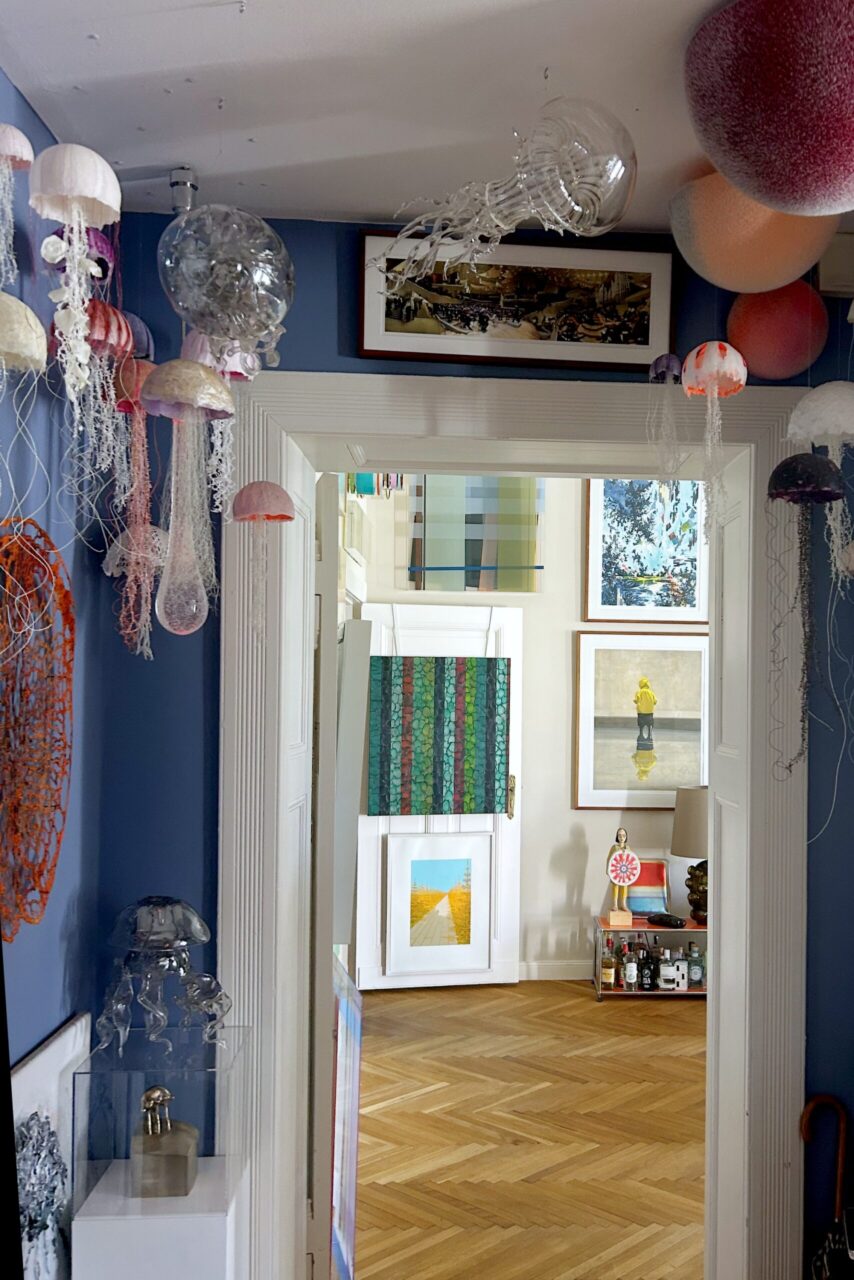
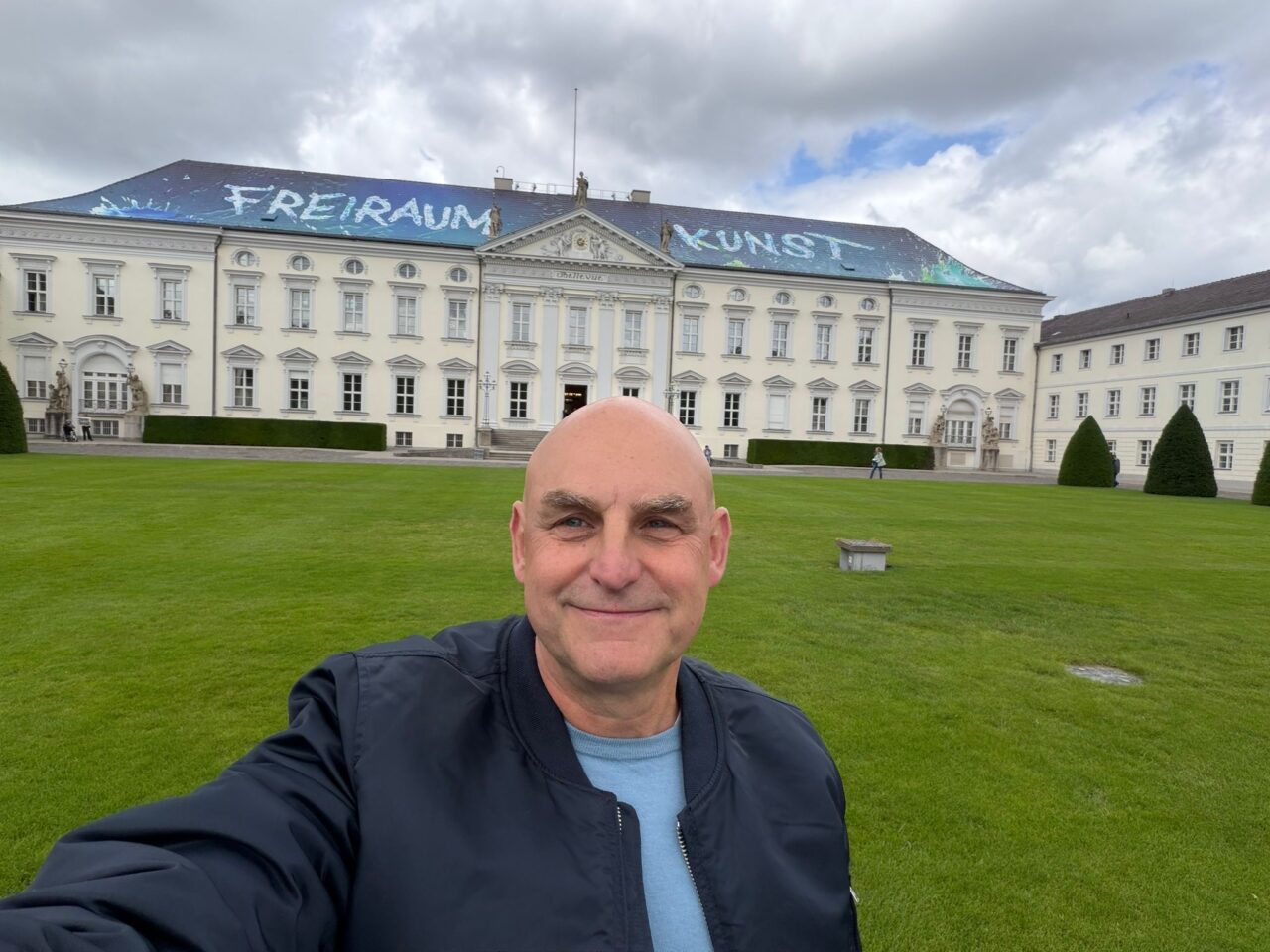
Constantin Carsten acquired his first works of art four decades ago while studying art history in Berlin. Since then, visits to galleries, museums, art fairs, artists’ studios, and auctions have continually informed the way he looks at art.
His collection follows neither a curatorial concept nor an investment strategy. Instead, every acquisition begins with a simple question: »Do I want to live with this work?« The answer is usually intuitive. He collects only works that continue to move and resonate with him, regardless of market trends or potential increases in value.
Today, the collection comprises around 300 works by approximately 130 artists. Its focus lies on contemporary art, primarily from the German-speaking world and, in particular, Berlin. Painting, works on paper, prints, sculpture, photography, and video stand alongside one another on equal terms. There are no stylistic boundaries or thematic criteria. The collection is held together solely by the collector’s personal eye.
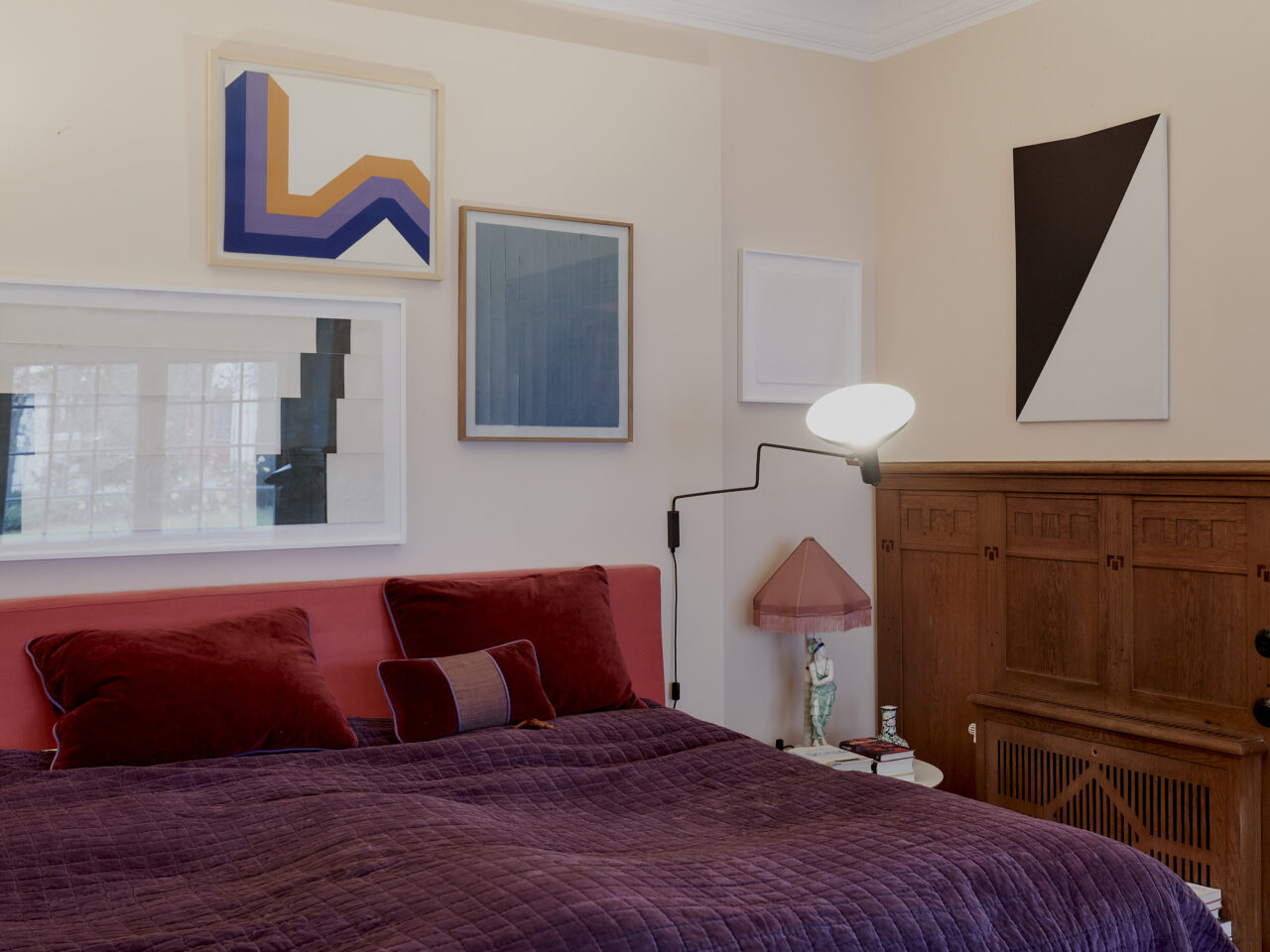
Almost all of the works are displayed where Carsten lives and works—in his Berlin apartment and his Hamburg office. For him, art belongs in everyday life. It should be seen, transform the spaces around it, and spark new conversations time and again.
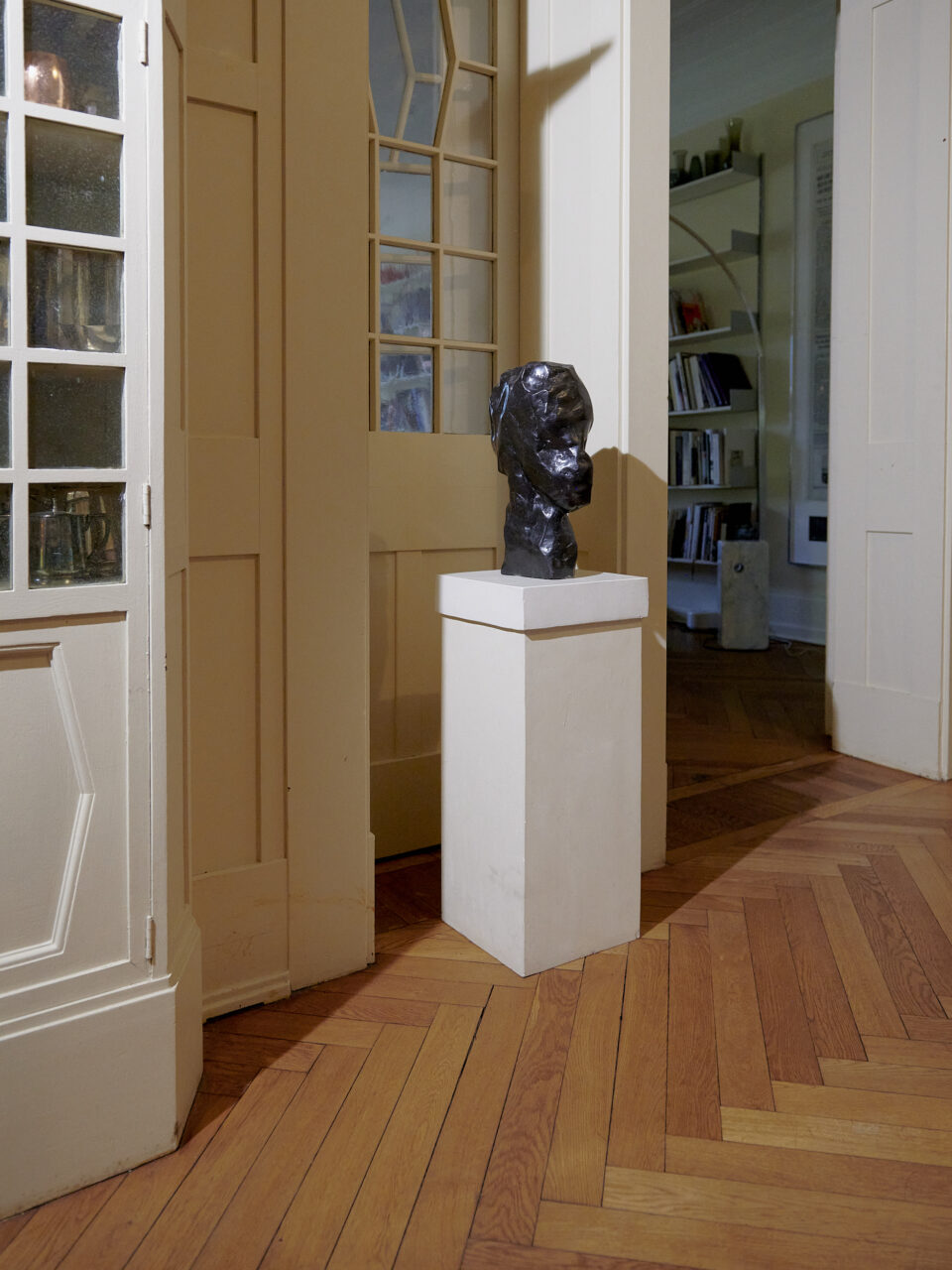
He has maintained long-standing relationships with many of the artists, and some have become close friends. One example is the Austrian artist Clemens Krauss, whose work Carsten has collected for many years. The collection includes works from different stages of the artist’s career, ranging from early paintings to sculptures and video works.
Carsten views collecting not as a finished project but as an ongoing process of looking, discovering, and learning. The collection continues to grow slowly and without a fixed plan, guided by curiosity and trust in his own eye.
His advice to anyone starting a collection is as simple as it is consistent: stay curious, develop your own eye, and acquire only works that will continue to resonate with you over time.
Visits to the collection are only possible as part of ›Discovering Collections!‹ on Saturday, 12 SEP 2026, from 6—10pm. Advance registration is required. Registration will close once capacity has been reached. The collection address will be shared once your registration has been confirmed.
Please note that, unfortunately, the collection is not wheelchair accessible.
The maximum number of participants has been reached. Registration is now closed.
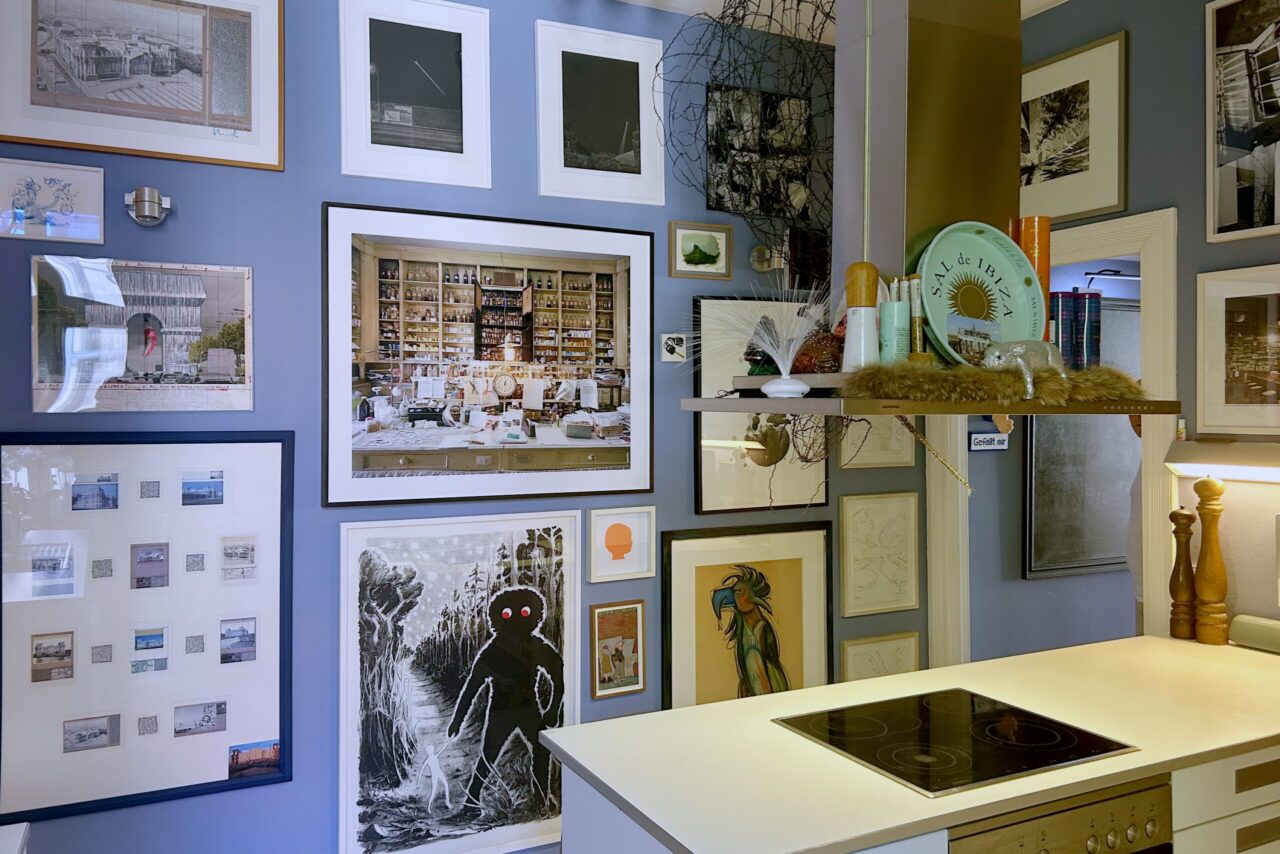
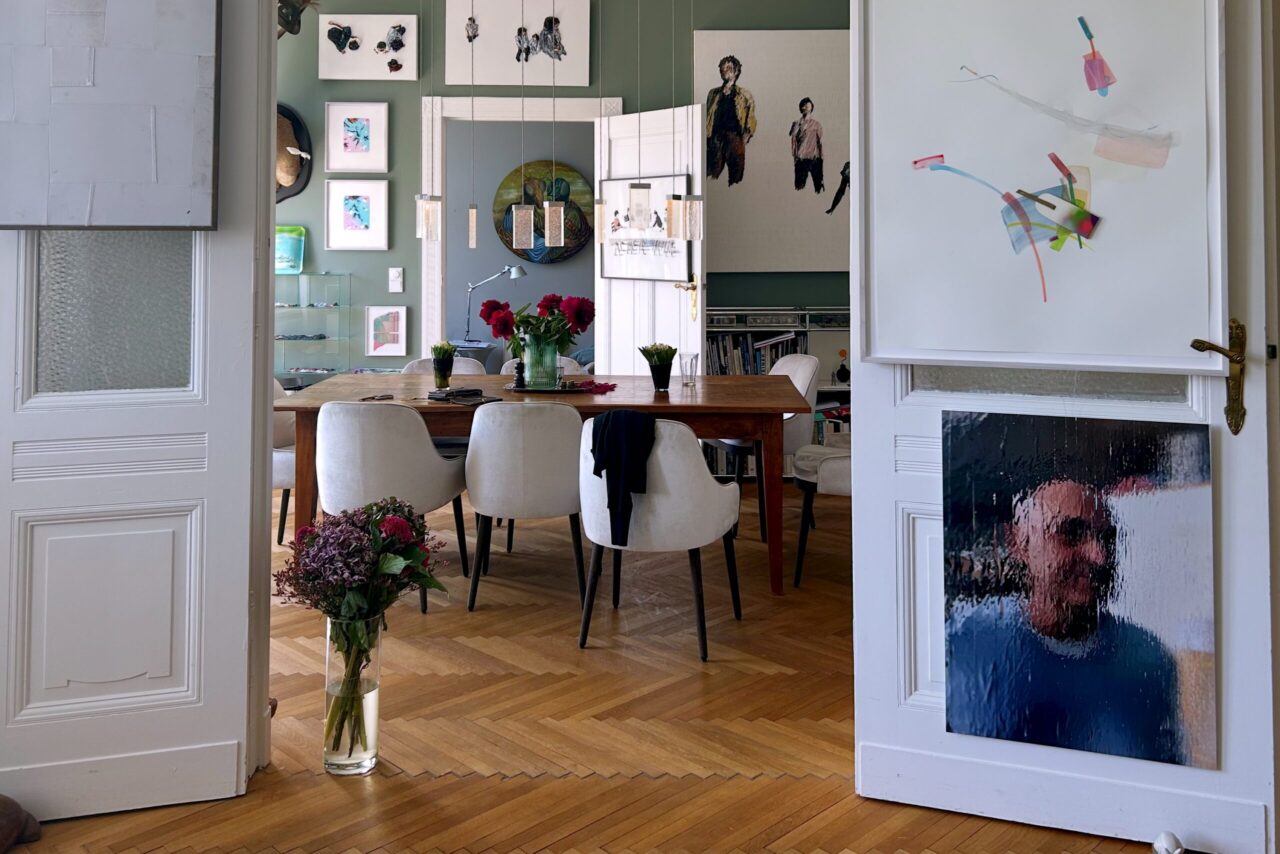
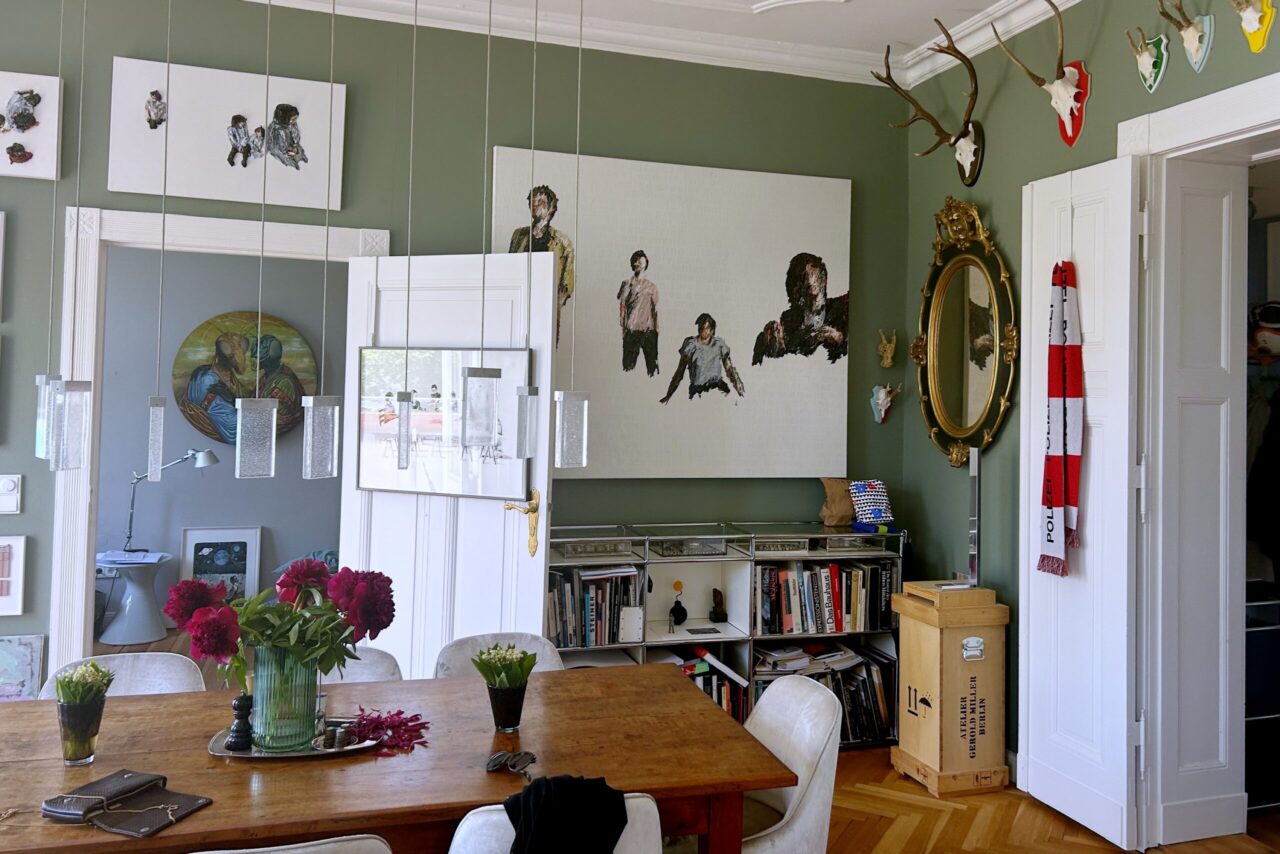
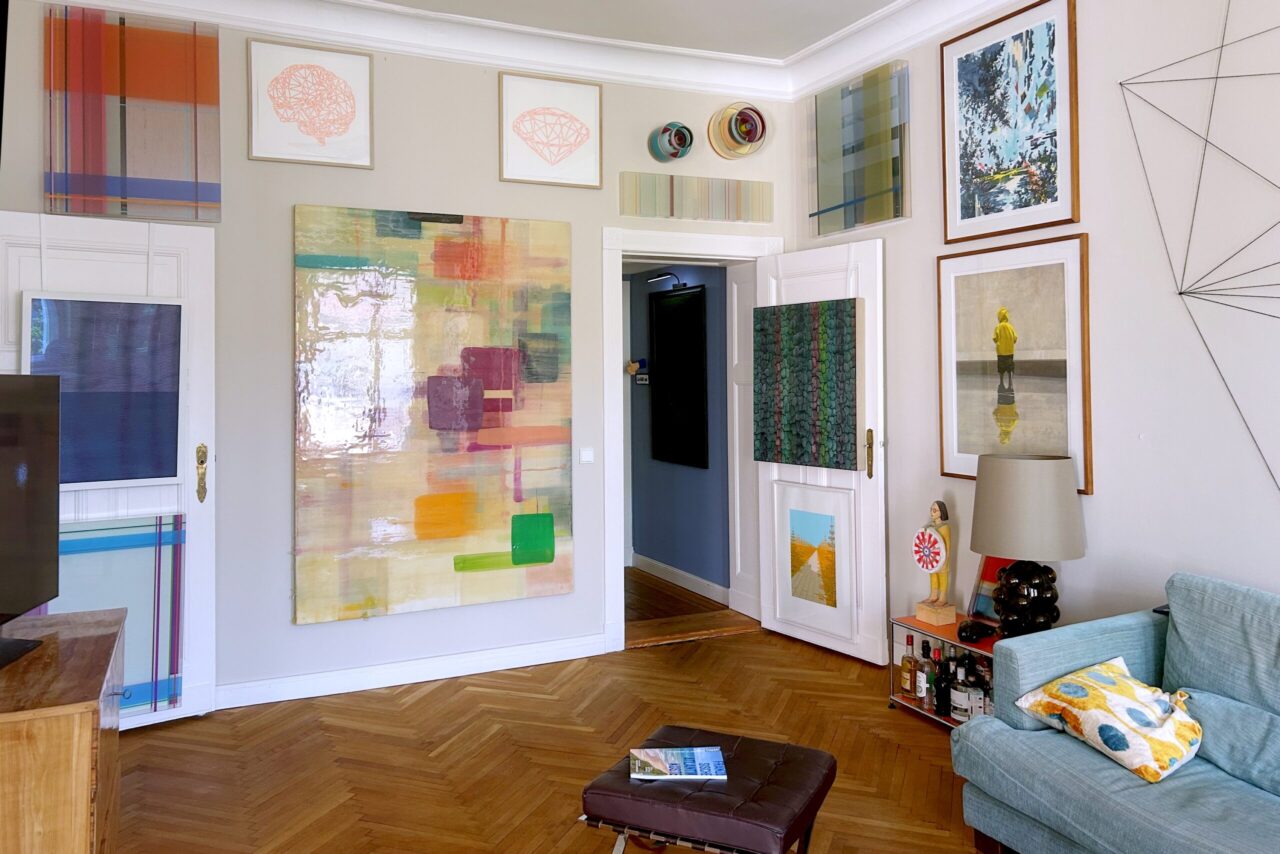
Private Collection Celerina-Berlin
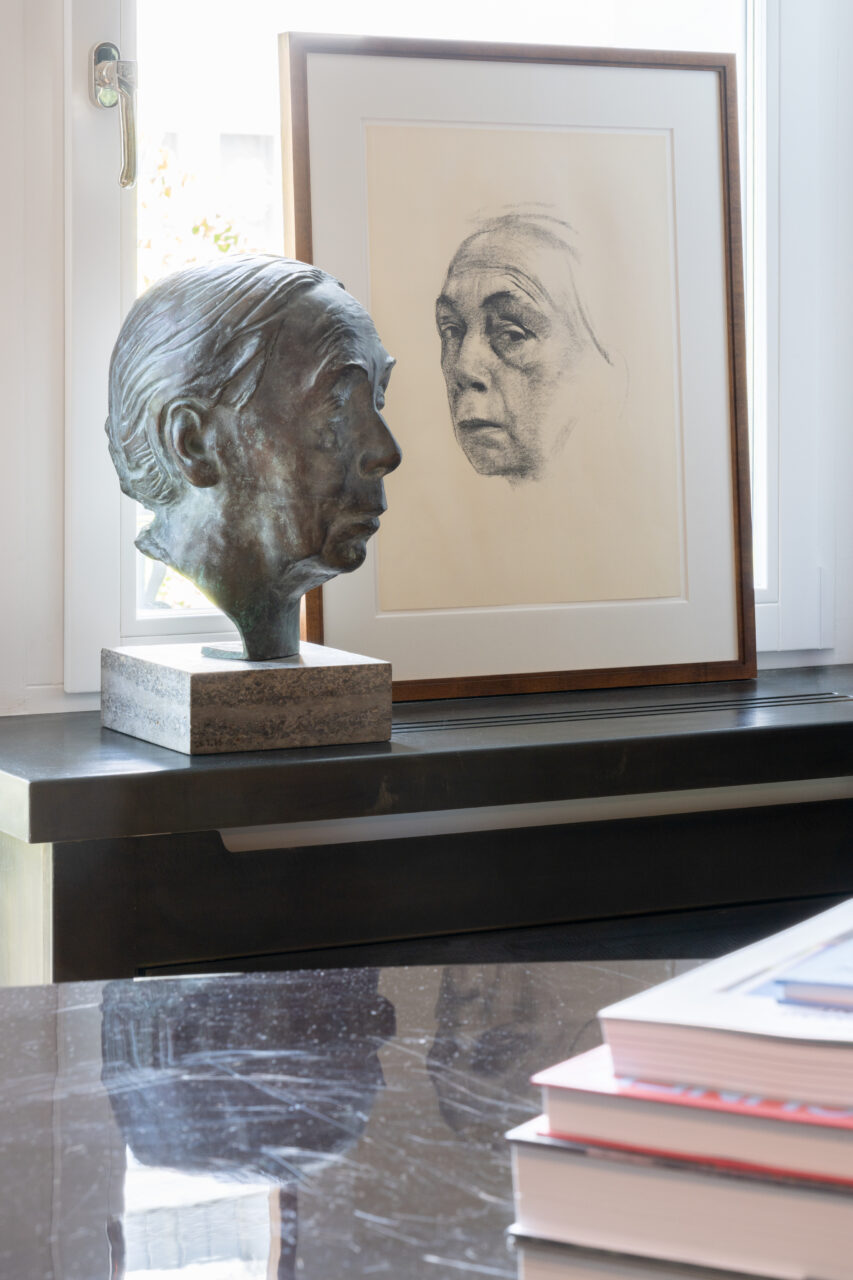
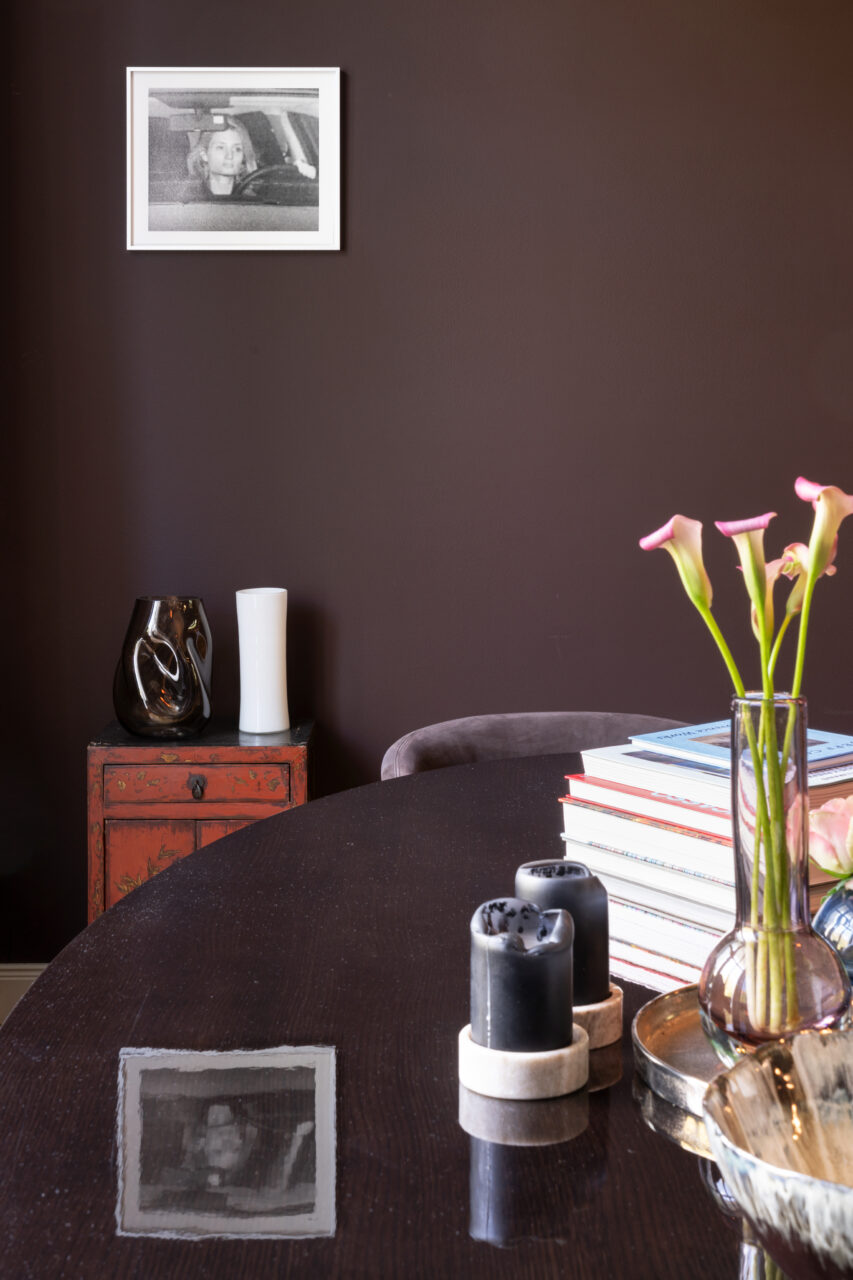
Private Collection Celerina-Berlin did not begin with the intention of building a collection, but through encounters with individual works of art. Initially, it was contemporary artists whose work resonated emotionally with the collector, Stefan Armonat, and that he wanted to make part of his everyday life. Only later did this evolve into a dialogue with artists of Classical Modernism, Expressionism, and Surrealism.
For Armonat, collecting is less about owning significant works than about a close connection to an artist’s individual practice. Drawings, lithographs, and smaller works offer him a direct point of access to artists such as Edvard Munch, Käthe Kollwitz, and Ernst Wilhelm Nay.
The collection follows no art-historical system but is guided by personal perception. Contemporary works by artists such as Jeremy Shaw, Rosemarie Trockel, and the Congolese collective CACTP open up new perspectives, while historical works create a sense of continuity. Photography, meanwhile, serves as a medium of memory—a way of capturing fleeting moments between reality and staging.
Every new acquisition begins with an emotional response. A work must raise questions, spark curiosity, or create an atmosphere that does not reveal itself immediately. For Armonat, art is most compelling when it embraces ambiguity and resists clear-cut answers. Over the years, the collection has evolved into a distinctive constellation of works shaped by intuition, openness, and the belief that relationships between individual works emerge gradually over time.
Visits to the collection are only possible as part of ›Discovering Collections!‹ on Saturday, 12 SEP 2026, from 6—10pm. Advance registration is required. Registration will close once capacity has been reached. The collection address will be shared once your registration has been confirmed.
The collection is wheelchair accessible.
The maximum number of participants has been reached. Registration is now closed.
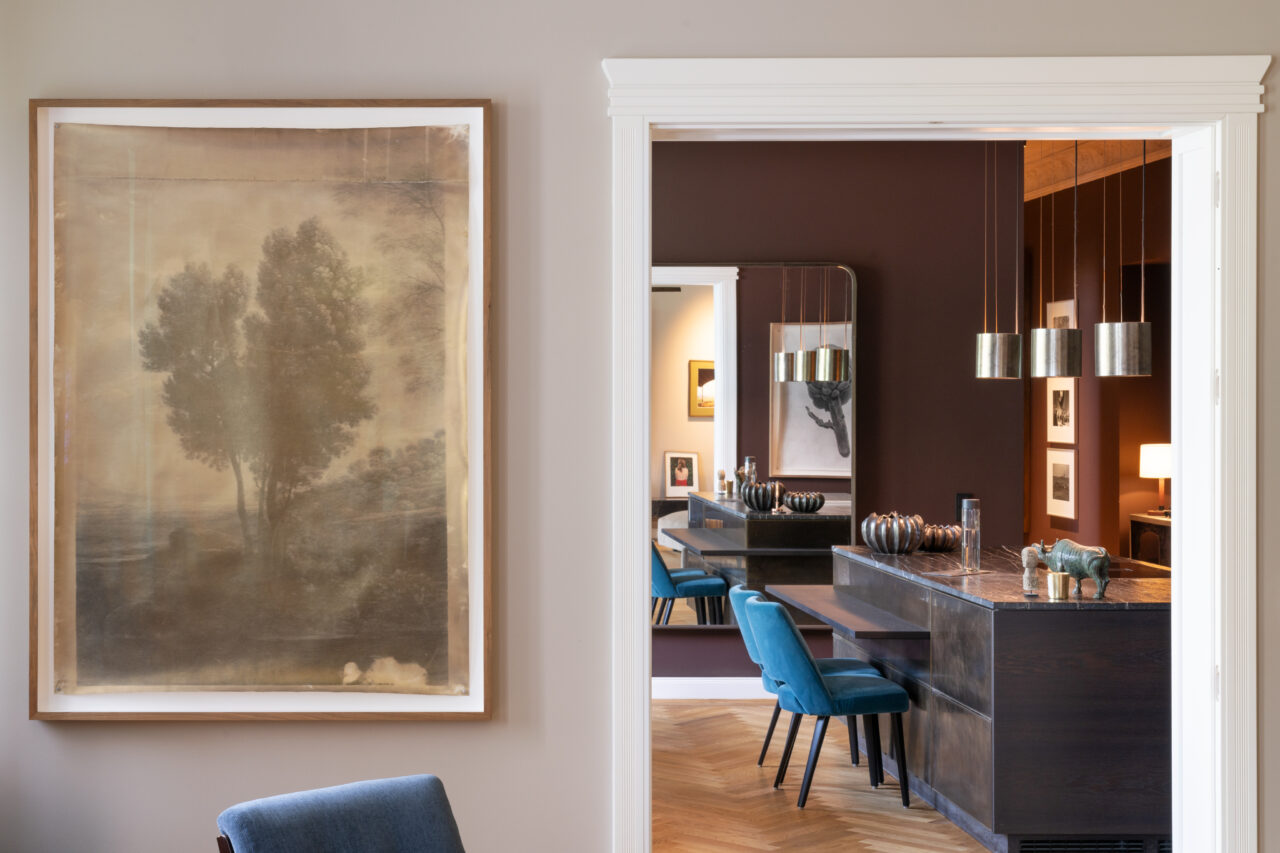
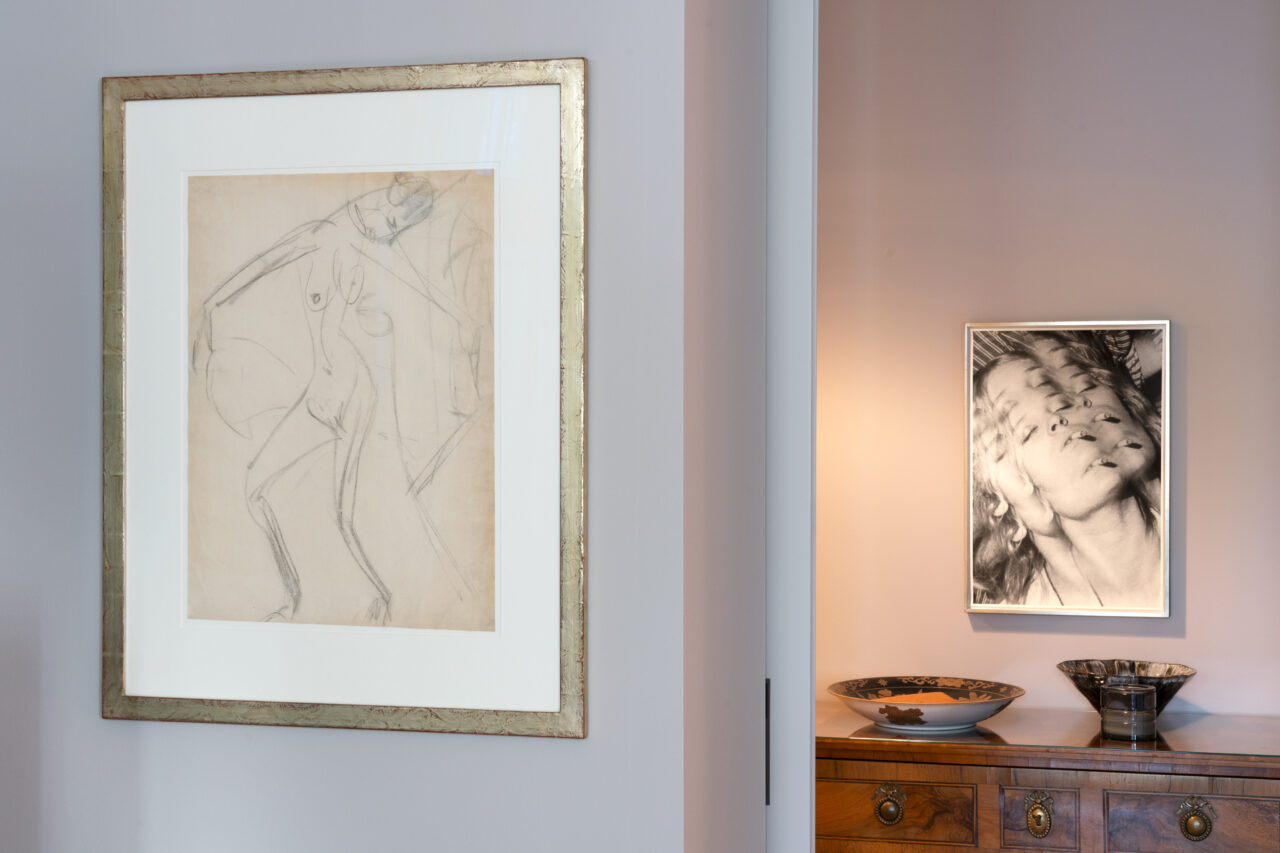
Duque y Kleihues Collection
Art historian Anna Duque y Kleihues and architect Jan Kleihues present their private collection in a historic waste transfer station in Berlin’s Charlottenburg district. The collection features works by, among others, Ferdinand Dölberg, Isabella Ducrot, Stefanie Heinze, Via Lewandowsky, Tobias Pils, Daniel Richter, Elene Shatberashvili, and Donata and Wim Wenders.
Both grew up in families where art was an integral part of everyday life. Close relationships with artists influenced their perspective from an early age and laid the foundation for an ongoing engagement with contemporary art. At the heart of their collection lies the immediate encounter with a work of art—that elusive, intuitive moment when something moves, unsettles, or continues to take hold.
The collection is housed in an extraordinary building with a remarkable history. Designed by Paul Baumgarten and completed in 1936, the former waste transfer station was built as a state-of-the-art industrial facility for loading much of Berlin’s waste onto barges. As the city’s infrastructure evolved, the building lost its original purpose and was at one point threatened with demolition. It was ultimately saved through the careful restoration led by architect Josef Paul Kleihues, who gave it a new lease of life. The building has been listed since 1988 and today also houses the architectural practice Kleihues + Kleihues, continuing the site’s story into the present.
Today, the place where hundreds of tonnes of Berlin’s waste were once transferred each day—and where the painter Markus Lüpertz later had his studio—has become a private home for art.
Visits to the collection are only possible as part of ›Discovering Collections!‹ on Saturday, 12 SEP 2026, from 6—10pm. Advance registration is required. Registration will close once capacity has been reached. The collection address will be shared once your registration has been confirmed.
Please note that, unfortunately, the collection is not wheelchair accessible.
The maximum number of participants has been reached. Registration is now closed.
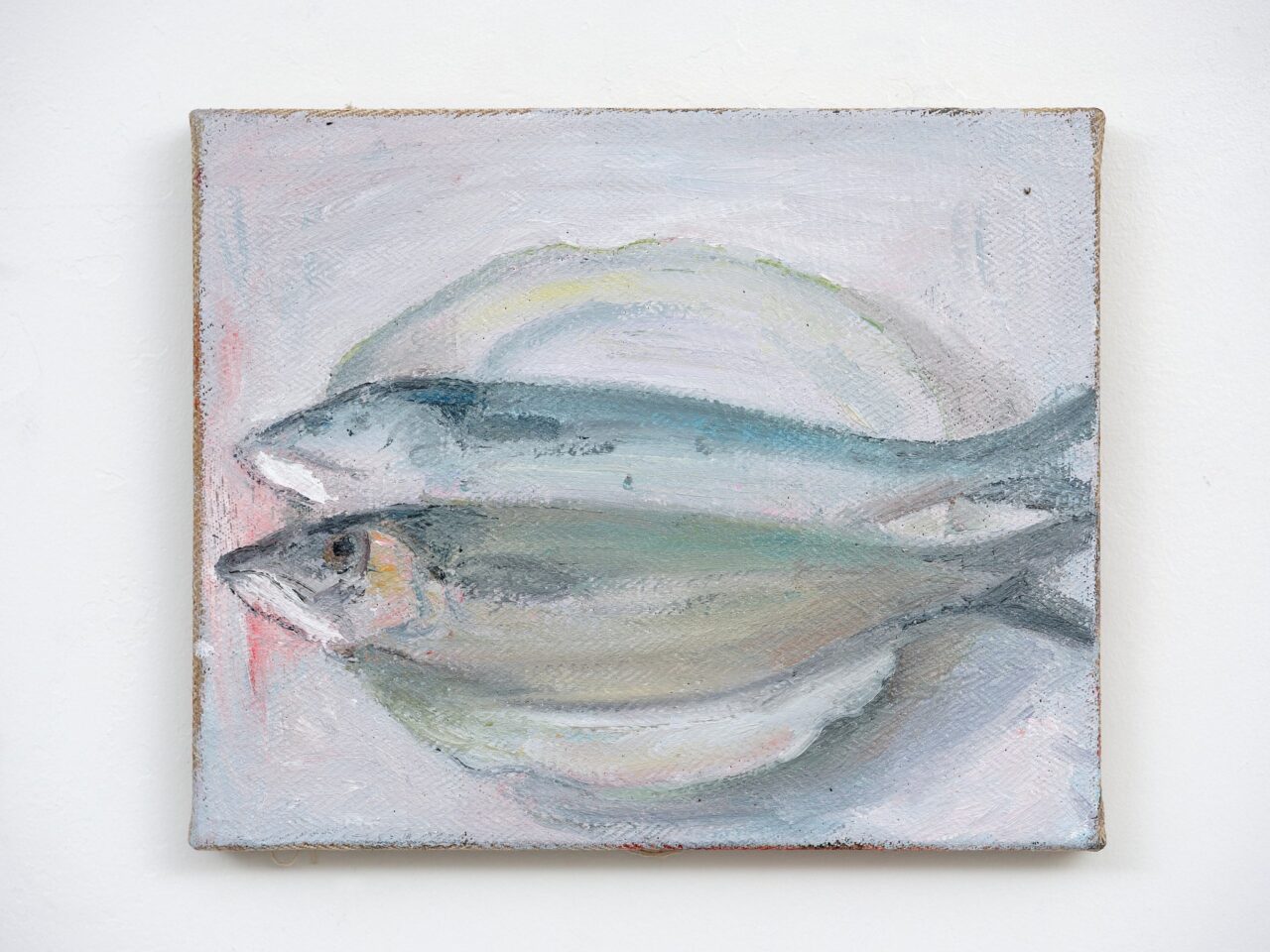
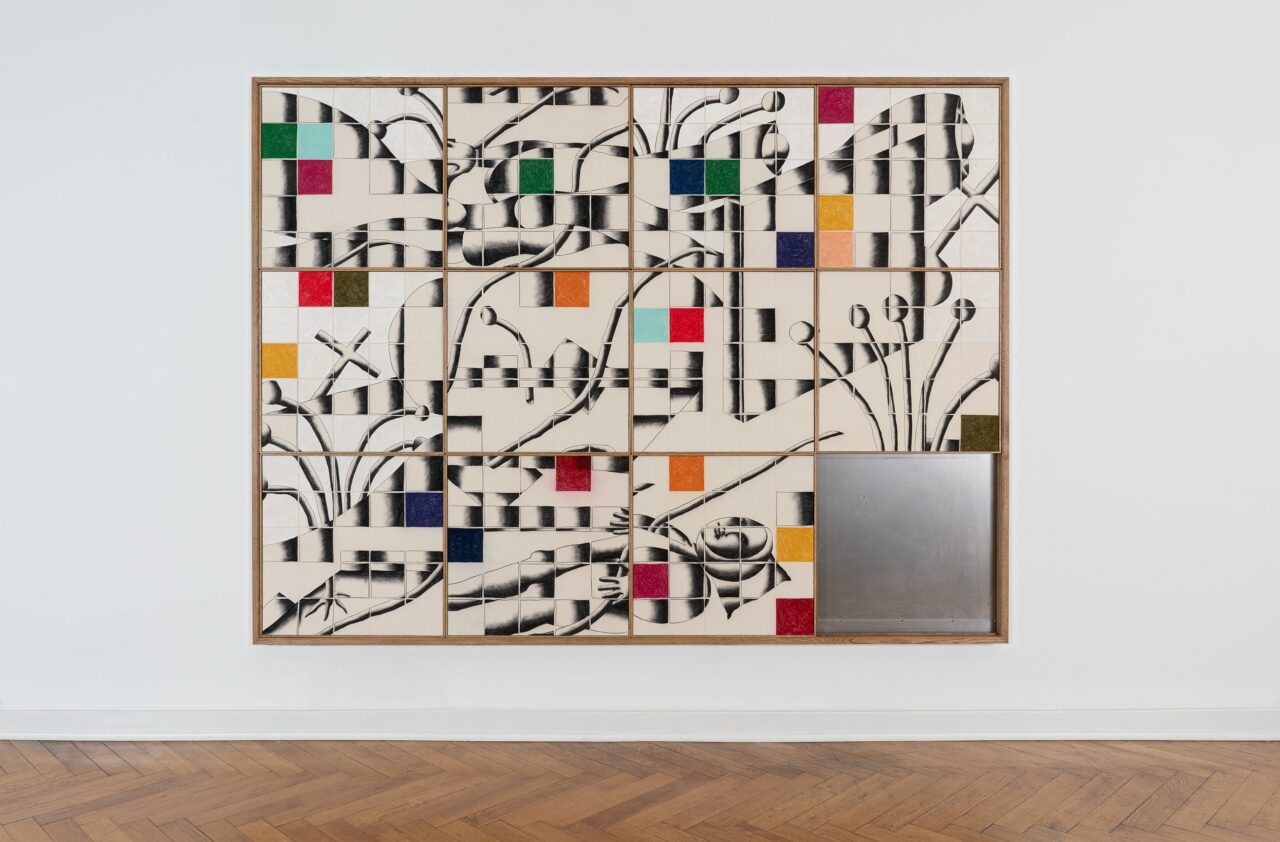
SWRZ Collection
Florian Schwarz collects East German art—from the avant-garde of the GDR and the post-reunification period to contemporary artists. At the heart of his collecting practice is the social media project @ddr.unboxing, through which he has created a dedicated platform for East German art. Followers are invited to join an ongoing journey of discovery, uncovering not only individual works but also the stories and contexts behind them. The aim is to understand East German art not through the lens of nostalgia, but as a vital part of the present—in digital spaces as much as in salons, exhibitions, and conversations.
It all began with a chance discovery. In a second-hand bookshop, Schwarz came across a woodcut by the Schwerin-based artist Karl Hennemann. The research that followed led him to the biography of an almost forgotten artist and revealed just how many significant figures in East German art history remain largely overlooked today. That first discovery sparked an ongoing search.
Rather than following a traditional canon, the collection is shaped by an interest in artistic practices, biographies, and moments of rupture. At its core are works that reflect the social and cultural experiences of East Germany while continuing to resonate beyond the circumstances of their creation.
Schwarz views direct contact with artists, estates, archives, and private collections as an essential part of collecting. Many works are to this day neither comprehensively documented nor digitally accessible. These personal encounters reveal connections that extend far beyond the individual artwork.
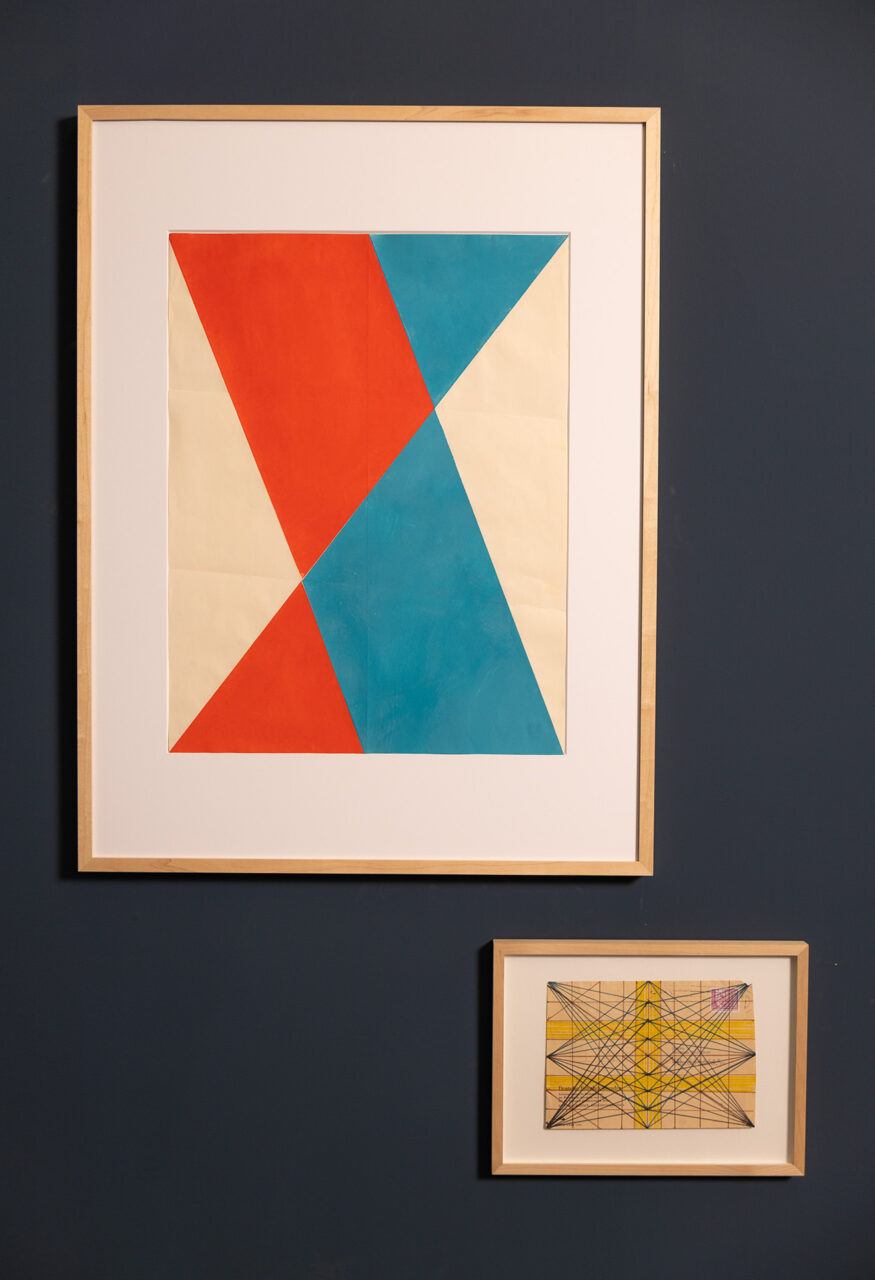
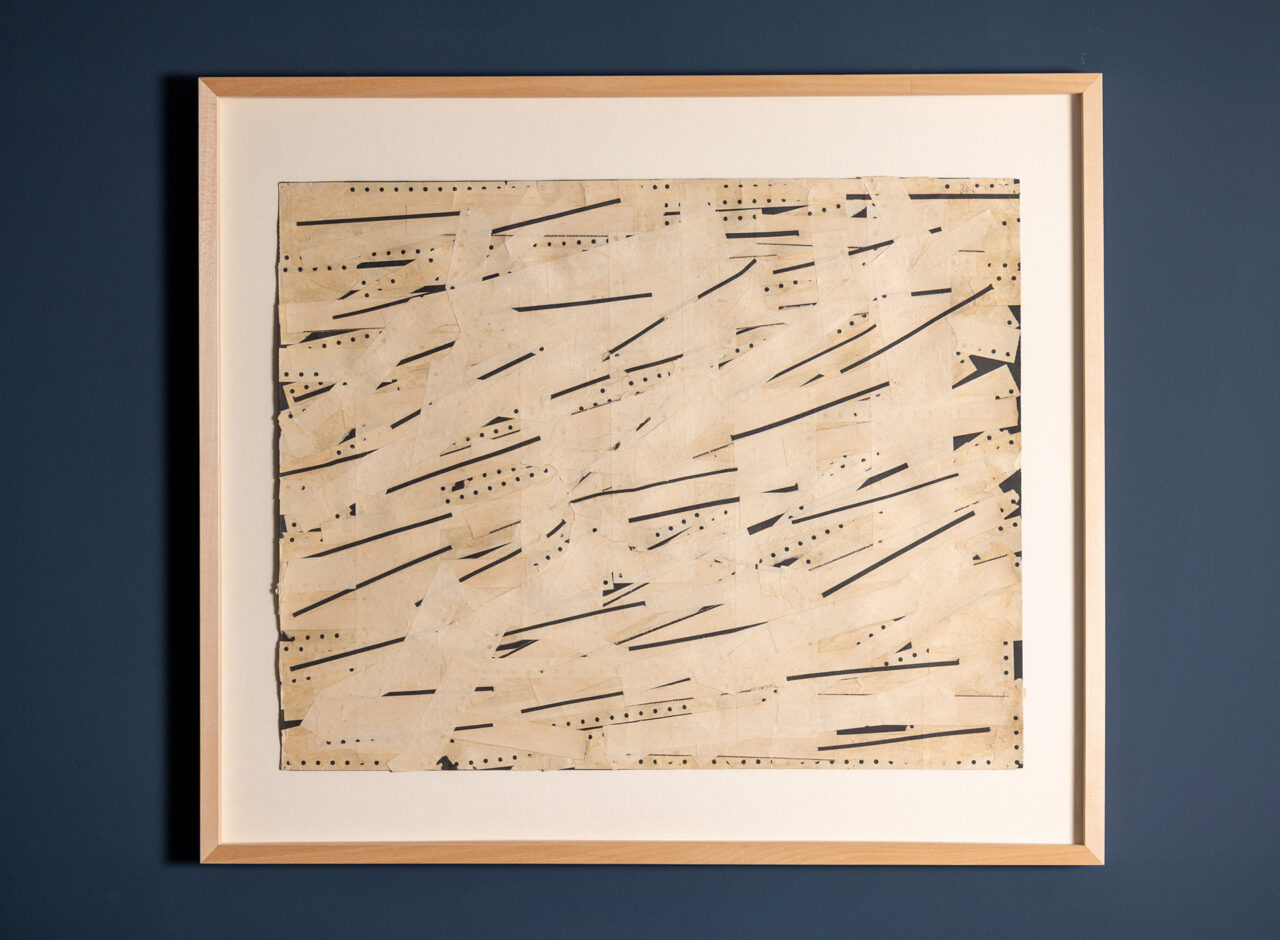
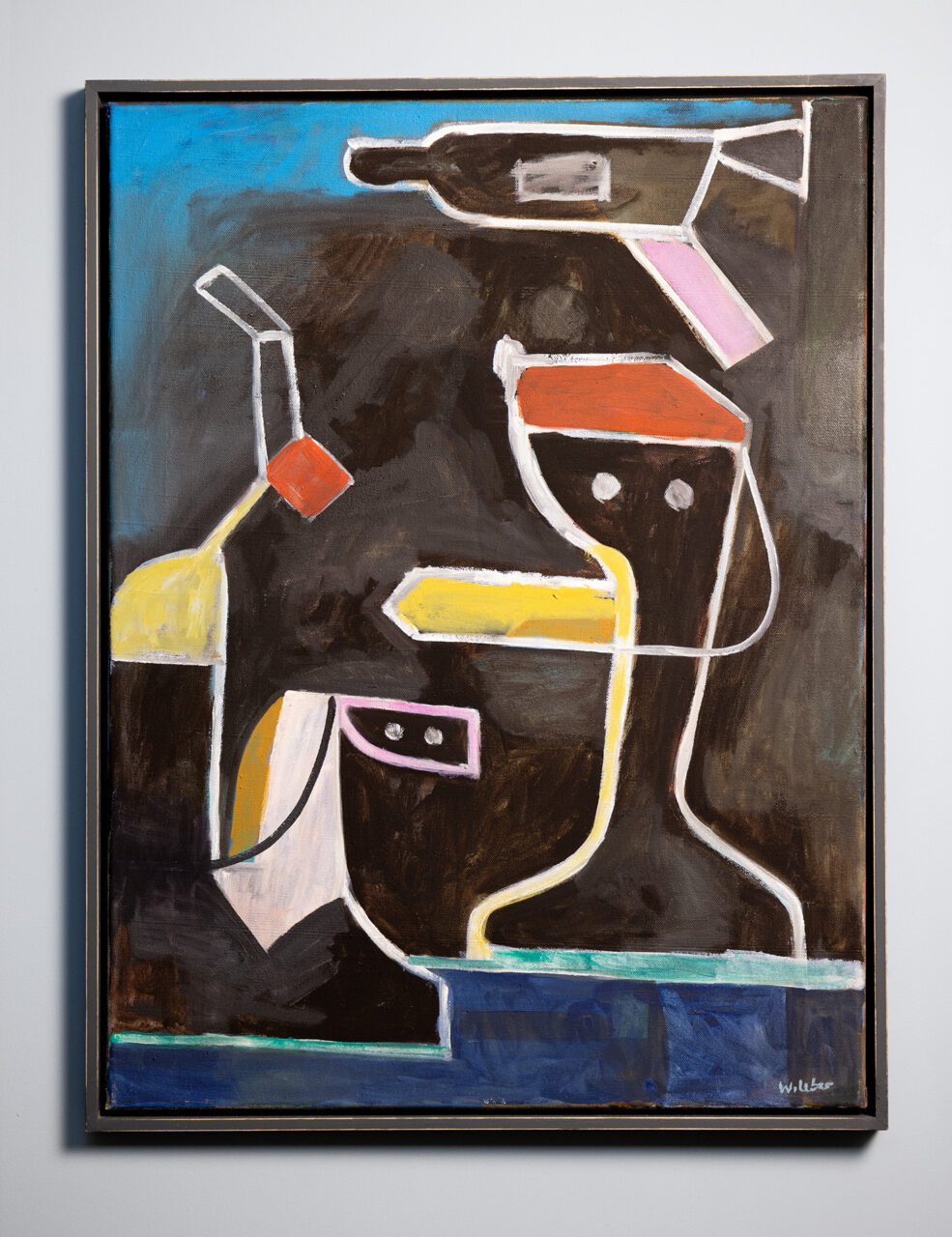
Among the key works in the collection are Karla Woisnitza’s 1988 collage ›weiße Ränder/schwarze Streifen‹ and Wolfgang Leber’s 2021 painting ›Abstand halten‹, which reflects on the experience of social isolation during the COVID-19 pandemic.
His advice to anyone starting a collection is simple: find your own path and trust your own eye. Great works lose none of their power over time—they simply become more complex.
Visits to the collection are only possible as part of ›Discovering Collections!‹ on Saturday, 12 SEP 2026, from 6—10pm. Advance registration is required. Registration will close once capacity has been reached. The collection address will be shared once your registration has been confirmed.
Please note that, unfortunately, the collection is not wheelchair accessible.
The maximum number of participants has been reached. Registration is now closed.
ROCCA Stiftung—Romba Collection of Contemporary Art
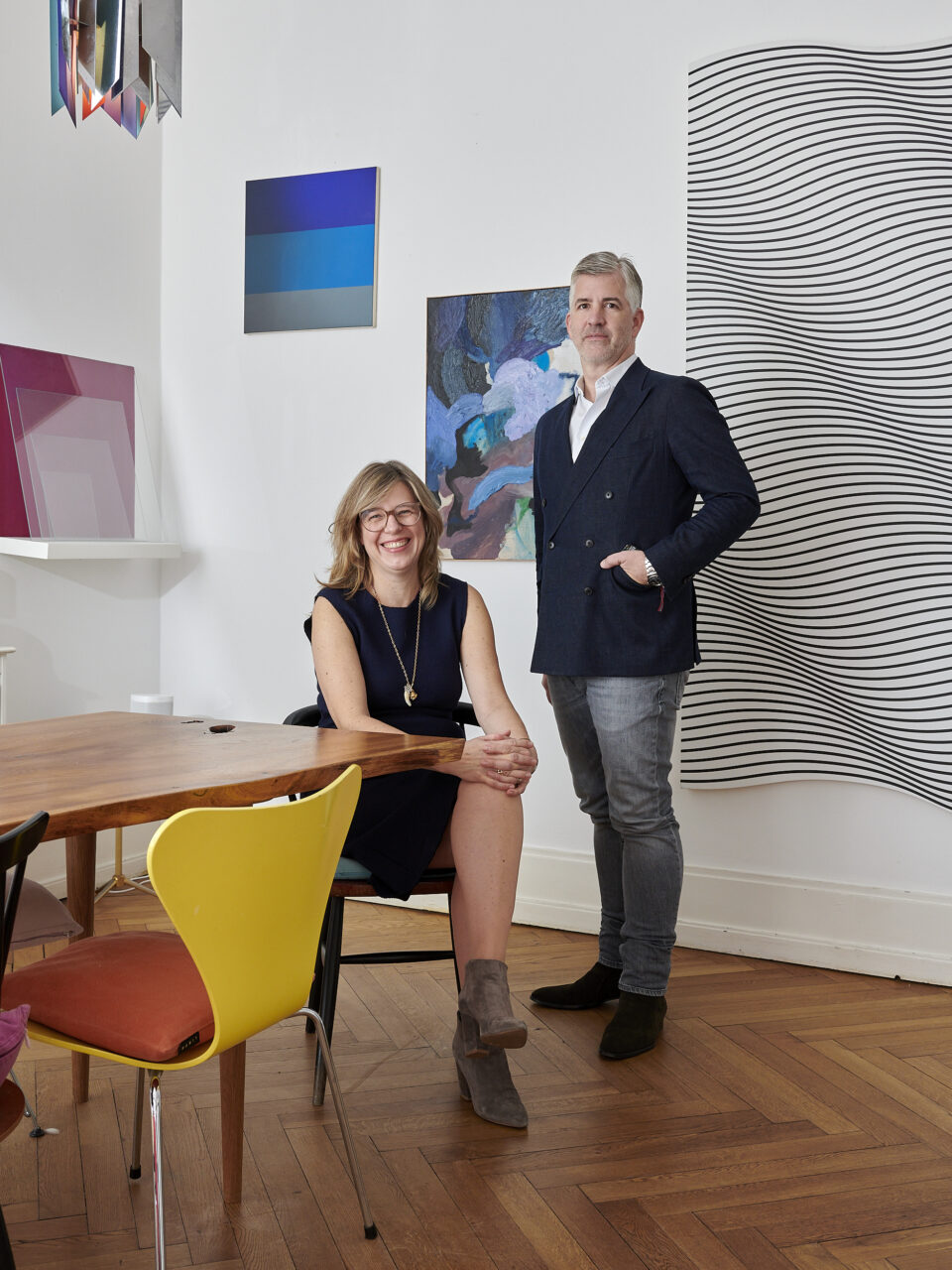
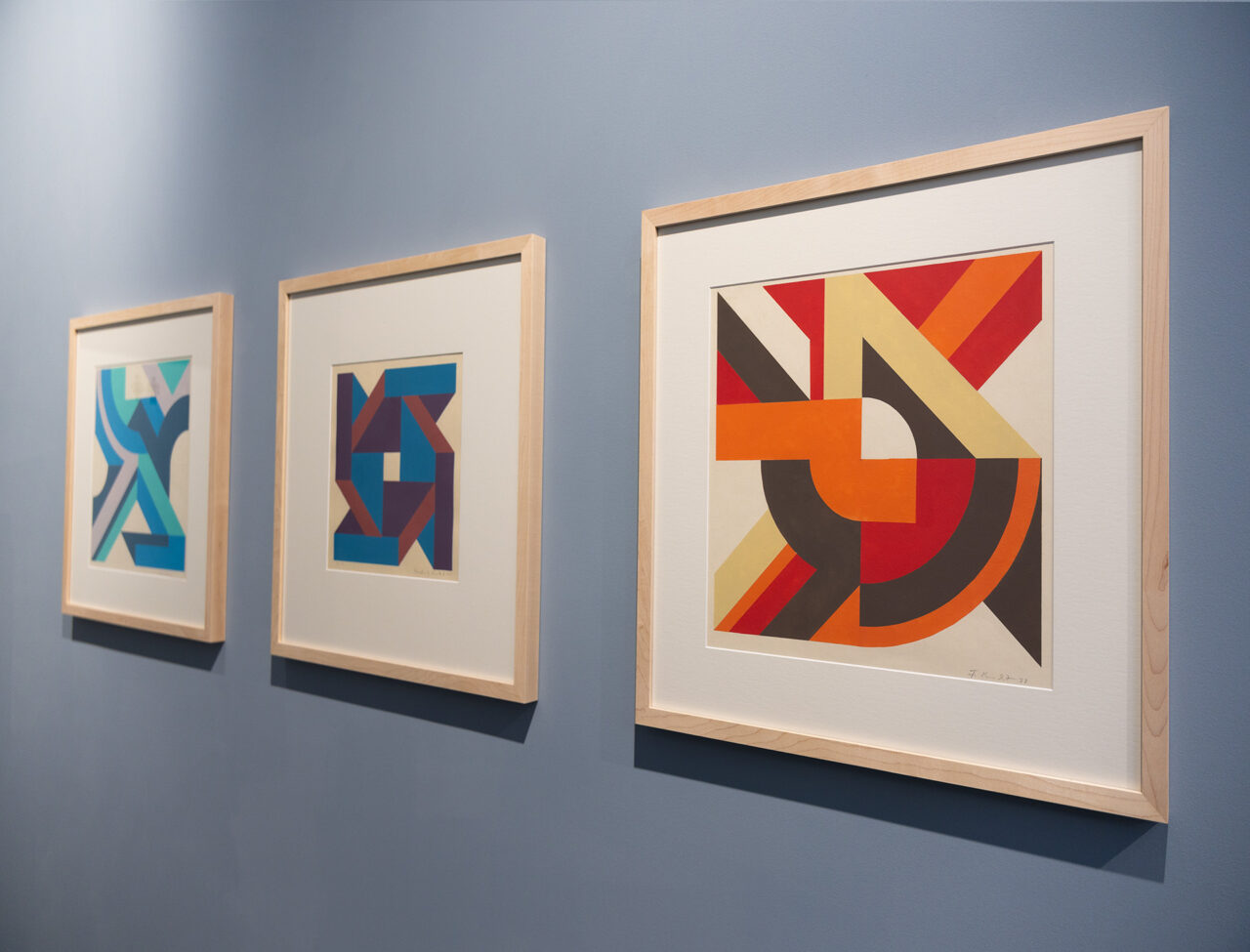
The collection of art historian Joëlle Romba and lawyer Eric Romba tells a shared story. More than twenty years ago, just a few weeks after the beginning of their relationship, they acquired their first work of art together, never imagining that it would one day grow into a foundation and a collection of more than 200 works. For them, collecting was never a strategic undertaking. It evolved naturally from their shared enthusiasm and love for contemporary art.
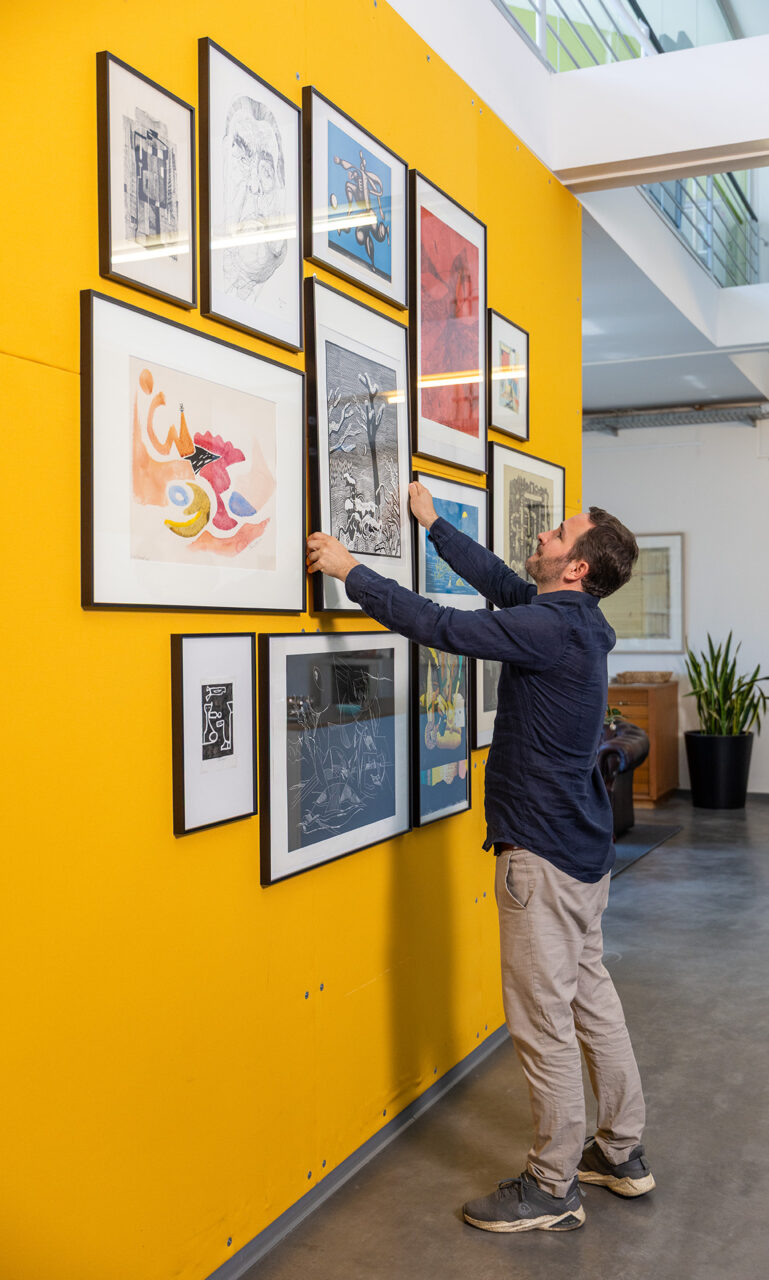
Today, the collection brings together painting, drawing, photography, sculpture, light installations, video works, and NFTs. Over time, the collection has developed a number of recurring themes, from photorealist painting and contemporary Op Art to questions of identity, architecture, and art history. The collection includes works by artists such as Tamina Amadyar, Philippe Decrauzat, José Dávila, Eberhard Havekost, Carmen Herrera, Gregor Hildebrandt, Thilo Heinzmann, Felix Kiessling, Julian Opie, Charlotte Posenenske, Leon Polk Smith, Wolfgang Tillmans, and Ignacio Uriarte. To this day, intuition remains the driving force behind every acquisition: they collect works that move, surprise, and continue to resonate over time, regardless of trends or market forces. Over the years, this has resulted in a collection whose unexpected juxtapositions and connections reveal as much about the collectors themselves as they do about the works they have brought together over more than two decades.
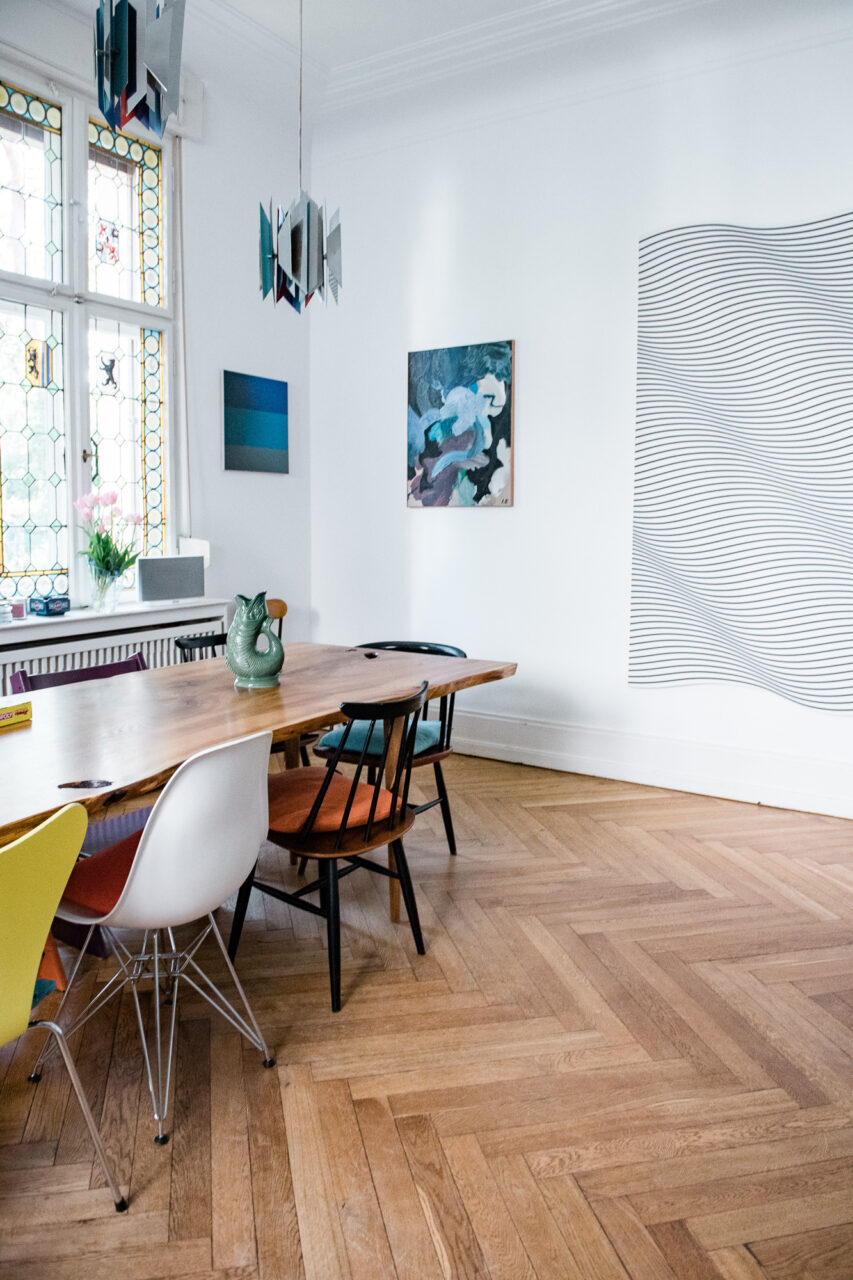
Art is woven into the family’s everyday life. It hangs between bookshelves, accompanies everyday routines, and exerts its quiet presence far beyond the conventions of the white cube. Visitors encounter not a white cube, but a home where art simply belongs.
With the founding of the ROCCA Stiftung in 2011, Joëlle and Eric Romba laid the foundations for preserving their collection as a coherent whole for the long term. At its heart lies the conviction that collectors have a responsibility towards art—as temporary custodians and as mediators between works of art and the public.
Visits to the collection are only possible as part of ›Discovering Collections!‹ on Saturday, 12 SEP 2026, from 6—10pm. Advance registration is required. Registration will close once capacity has been reached. The collection address will be shared once your registration has been confirmed.
Please note that, unfortunately, the collection is not wheelchair accessible.
The maximum number of participants has been reached. Registration is now closed.