


This article first appeared in our limited-edition anniversary publication, 15 YEARS BERLIN ART WEEK.
In conversation: Kristian Jarmuschek, Managing Director of the Positions Berlin art fair; André Schmitz, former State Secretary for Culture; Christian Boros, collector, communication designer, and publisher; Svenja von Reichenbach, Director of PalaisPopulaire; Simone Leimbach, Head of Exhibitions and Events at Kulturprojekte Berlin; and Moritz van Dülmen, CEO of Kulturprojekte Berlin.
BAW: Let’s go back to 2012 for a moment. Mr Jarmuschek, what did the end of the Art Forum art fair mean for the satellite fair Preview, which you co-directed at the time?
KJ: For us, it was a disaster. Preview saw itself as a platform for the many emerging galleries that had no place at Art Forum. We wanted to orbit around something, but suddenly the centre was gone. I immediately contacted Ingrid Walther, who headed the relevant section of the Senate Department for Economic Affairs at the time. She asked us, along with Marc Glöde and Silke Neumann, who were responsible for art berlin contemporary (abc), to put down on paper what kind of successor model we had in mind. When we met between Christmas and New Year to jot down a few ideas, that was the first time the thought came up of moving away from a single beacon and instead presenting everything else Berlin had to offer.
BAW: André Schmitz, how did you become involved in all this as State Secretary for Culture?
AS: I read about the end of Art Forum in the newspaper. I was personally outraged. Strictly speaking, it wasn’t our responsibility, but of course the fair had a cultural dimension too. Ingrid Walther approached us fairly early on. The Senate Department for Economic Affairs could provide €250,000 for whatever came next. That wouldn’t have been enough for another major fair. I don’t know whether this idea had a mother or a father. After several roundtable discussions, including at my office on Brunnenstraße, we eventually decided: we’re not going to start another fair. Instead, we’re going to build on the strengths we already have, bring them together, and connect them. That sounds easier than it was because, as we know, the cultural sector is full of strong individualists. And things get complicated in politics too when two different administrations have to work together. Cooperation between the economic and cultural administrations certainly wasn’t the norm.
SL: Berlin Art Week emerged from a crisis—but that, in turn, released new energy. The first real innovation was simply joining forces in the first place. This new format, which then developed into Berlin Art Week within the space of just a few weeks, was above all a shared commitment to Berlin as a centre for art.
BAW: How did you manage to bring all these different players together?
MVD: By then it was March and we had no time at all. We were determined to keep the autumn date that Art Forum had established on the international art calendar. At Kulturprojekte, we had already launched a similar project with ›Berlin Music Week‹. Through our ›Long Night of Museums‹, we also had experience bringing cultural institutions together and knew that the whole could amount to more than the sum of its parts. There was no formula, but we did know how to create joint ventures and get competitors to put their differences aside for a while. Our role was to bring the various interests together and keep reminding everyone of the common goal.
SL: There was this sense of laying the foundations in 2012, and with all that energy and excitement, we managed to create something in just a few months that would probably have taken us years otherwise. The pressure helped.
KJ: We had to throw it together at breakneck speed, and then suddenly everyone wanted to be part of it.
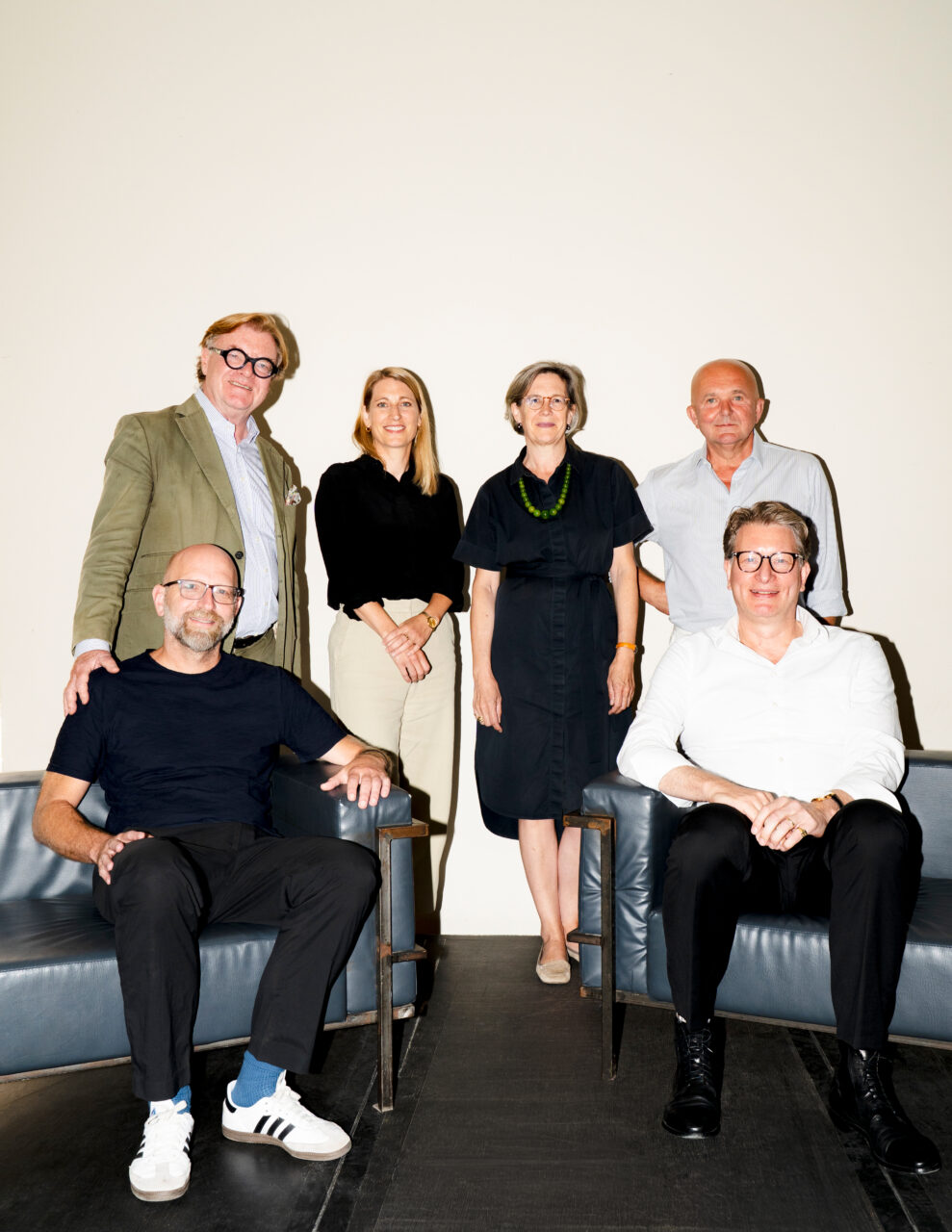
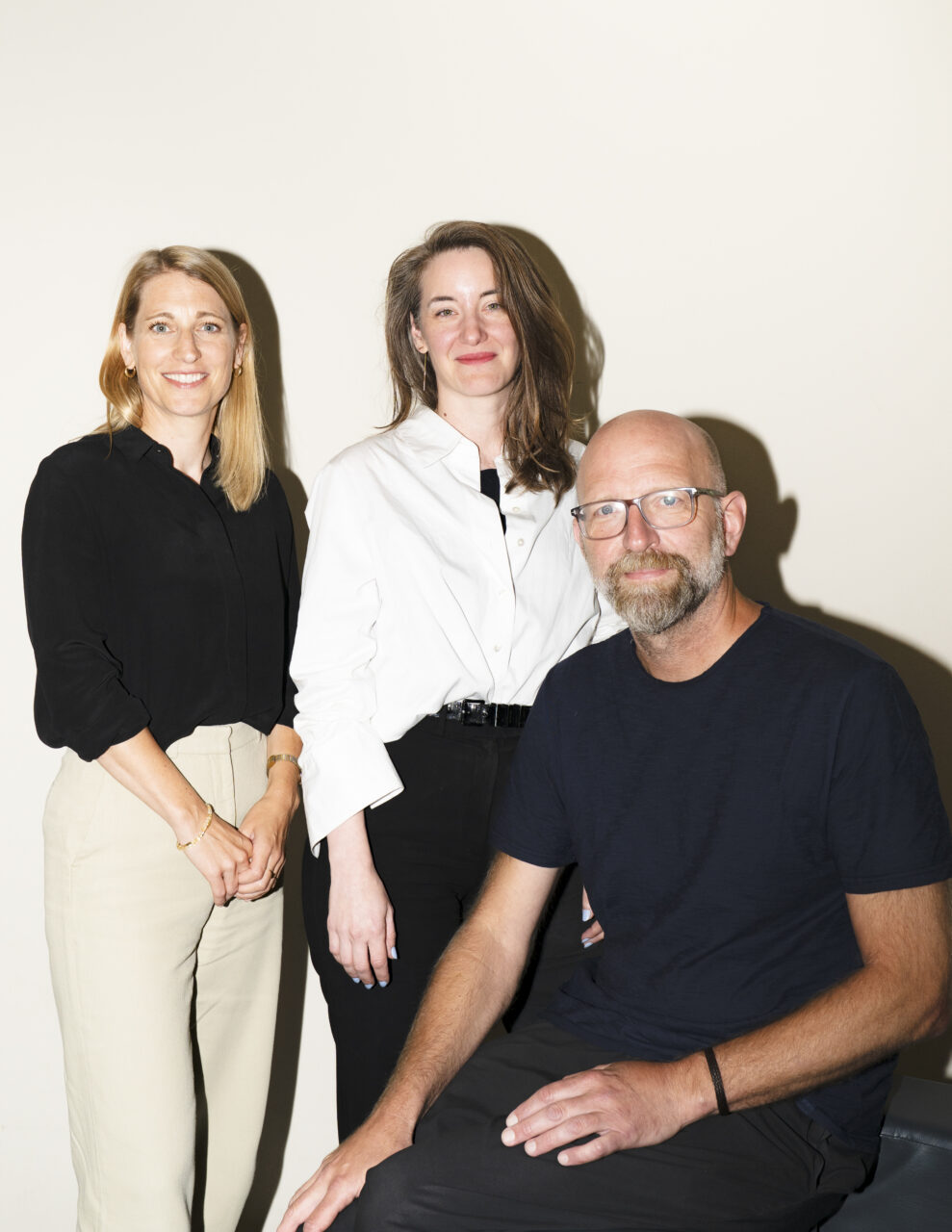
BAW: Svenja von Reichenbach, how did you view the initiative at the time from your position at Deutsche Bank KunstHalle?
SVR: Like everyone else, after Art Forum ended we wondered what could come next, because we wanted Berlin to retain its position as a centre for art. As Deutsche Guggenheim Berlin, we had already taken part in Kunstherbst Berlin, an early attempt to find ways of working in partnership. Berlin’s art scene has undergone a profound transformation over the past thirty years, and with a platform like Berlin Art Week, the city has also played a part in changing the international art world.
BAW: Speaking of playing a part in that: Christian Boros, you’ve been involved with Berlin Art Week in a number of different roles, both as an advocate and as a collector. You also developed Berlin Art Week’s visual identity and brand. What guided your thinking?
CB: When several players come together, it’s easy to dwell on their differences. Finding common ground takes much more effort, but that was precisely the basic idea behind Berlin Art Week. I knew I couldn’t develop some complicated narrative. The idea had to fit on a beer mat and be something everyone could agree on. We cut everything away, as if with pruning shears, until we reached the nucleus, the point. An identity this pared back still works today because it’s concise, surgically precise, and radically austere. My argument was this: a brand marks something. These dots are stuck on the ground at the individual locations. They mark them, connect important places, and put them on the map.
SL: The word »mark« is interesting, because it’s not just the places that are marked, but also this date in September—once the date of the fair, and now the start of the season.
SVR: The dots are outward signs of that. Through Berlin Art Week, many Berliners have come to see that art and culture don’t only happen behind the walls of hallowed institutions, but can spill out into the city. Suddenly, art became visible and something people could experience, radiating a sense of lightness and vitality.
CB: I myself am always very happy when autumn comes around and there’s a dot stuck on the ground outside our bunker.
AS: Berlin Art Week is a bit like the logo Christian Boros designed: the idea of bringing together the gallerists, collectors, museum directors, and artists who live here is actually very simple, but the impact has been enormous. That’s something cultural policy needs to do more of again today, at a time when money is becoming scarcer: build on the strengths we have and bring them together.
SL: At first, the funding came solely from the Senate Department for Economic Affairs, while the Senate Department for Culture contributed a great deal of commitment. But the Department for Economic Affairs didn’t see this as subsidising cultural events; it saw it as an investment in Berlin as a cultural centre. That’s why it would be fatal to stop supporting something that has been built up through fifteen years of investment: a brand that stands not only for a festival, but for Berlin as a centre for art, exhibitions, artistic production, and the art market.
KJ: At the time, Berlin Art Week played a very important role in how Berlin saw itself. In the nineteen-nineties, there was this idea in Berlin that art was only good if it came from as far away as possible. Berlin Art Week helped us appreciate what we had here in the city. At the same time, bringing everything together in one concentrated week raised Berlin’s international profile.
SL: The idea behind Berlin Art Week itself also had a major international impact. There’s now an entire network of Art Weeks across Europe modelled on ours.
MVD: Berlin Art Week has also always made a very clear commitment to its audience. Contemporary art often had an elitist air about it, and suddenly the programme included a street festival on Auguststraße that drew tens of thousands of people. That became one of Berlin Art Week’s defining characteristics: reaching large numbers of people through contemporary art.
KJ: I loved the opening on Auguststraße in 2013. You’d walk along and just think: ›Wow!‹
SVR: That’s precisely what defines Berlin Art Week: it has never stood still. Every year, we thought about it afresh, with Kulturprojekte also initiating new ideas. Those were wonderful years, when we organised exhibitions together across different institutions. The theme of ›Stadt/Bild‹ (City/Picture) feels more relevant than ever. ›Painting Forever‹ marked the first time Deutsche Bank KunstHalle took part. The collaboration was great fun and helped get institutions talking to one another. The pandemic made it clearer than ever that we can only achieve something if we communicate with each other. Berlin Art Week laid the foundations for that, and for synergies that can help sustain the relevance of culture in Berlin in the future.
SL: The connection between professional audiences and the wider public, the concentration of spaces, places, people, and artistic positions—all of that has remained central to this day. Those were the foundations from which Berlin Art Week has developed in many different directions, because we’ve retained that sense of openness and curiosity. That extends to discovering new places and new routes through the city. Even our expert juries are regularly surprised by just how much there is here. And that’s what Berlin Art Week still invites us to do today: discover our own city and play a part in its development.
15 YEARS BERLIN ART WEEK
To mark its 15th anniversary, a limited-edition booklet looks back at the past, present and future of Berlin Art Week. Across 128 pages, the publication brings together essays, interviews and photo features that trace the evolution of the past 15 years while also examining the current state and future prospects of Berlin as a city of art. More than 50 voices from across Berlin’s art scene share their perspectives.